
Inverters (PCS)
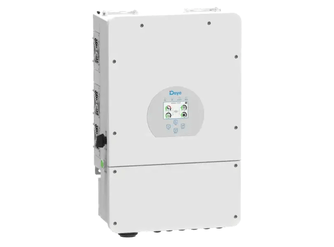
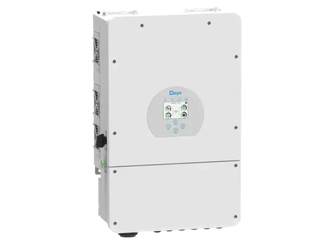
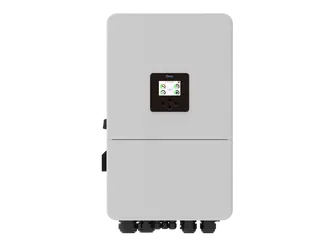
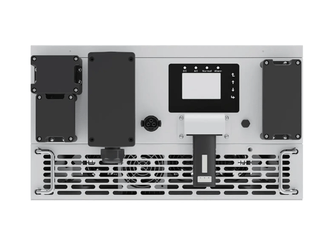
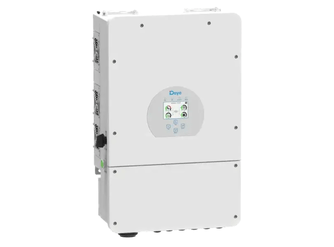
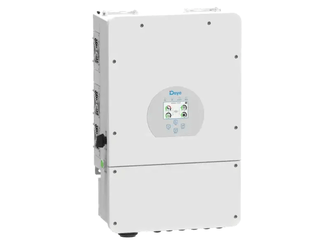
Inverters (PCS — Power Conversion System) convert direct current from solar panels or batteries into alternating current suitable for powering equipment or feeding electricity into the grid, and control energy flows between the generation source, energy storage system, and load. A grid-tied inverter (PCS) is a basic type that operates only synchronously with the grid and does not have an autonomous mode. It is suitable when the main goal is simply to reduce grid electricity consumption through on-site generation.
A hybrid inverter combines solar generation, energy storage, and grid operation in a single device. This type is required when not only energy savings but also energy independence of the facility during power outages is important. The catalog features Deye and Solis hybrid models with capacities from 6 to 125 kW, available in single-phase and three-phase versions, with multiple MPPT trackers.
Industrial Inverter and Three-Phase Inverter for Solar Power Plants
For facilities with high power loads — manufacturing plants, warehouses, business centers, or ground-mounted solar power plants — a three-phase industrial inverter is required. The catalog includes models from 12 to 125 kW with multiple MPPT trackers, specifically designed for high-power three-phase inverters for solar power plants: distributed generation at ground-mounted solar stations, supplying power to industrial loads, or parallel operation of multiple inverters to increase the total system capacity.
For smaller facilities — offices, shops, and non-industrial premises — single-phase models with a capacity of 6–8 kW are sufficient.
How to Choose an Inverter for a Solar Power Plant
The choice of an inverter for a solar power plant depends on the facility's requirements:
- Hybrid inverter — when both reduced electricity costs and autonomous operation during power outages are required.
- Grid-tied inverter — when synchronous operation with the grid is sufficient and an autonomous mode is not required.
- Off-grid inverter — when the facility operates independently of the grid together with an energy storage system.
An inverter is only one component of a comprehensive energy system. For a fully autonomous or backup power solution, it can be combined with battery cabinets and modules or ready-made backup power supply kits / energy storage systems, while generation can be provided by a solar power plant as part of a BESS. Smart Grid engineers will select the inverter type and capacity based on your facility's load, the number of grid phases, and the specific requirements, as well as provide system design, installation, and commissioning on a turnkey basis.
Contact us for consultation and inverter selection — we will calculate the configuration based on the power requirements and phase configuration of your facility.