Industrial Pumps: Types, Applications, and How to Choose the Right Pump
Industrial pumps are not a single category of equipment but several fundamentally different designs, each intended for a specific task: pumping clean water, viscous liquids, abrasive mixtures, or wastewater. Choosing the wrong type of pump can cost much more than the purchase itself, leading to production downtime, premature equipment wear, and expensive repairs. In this article, we will review the main types of industrial pumps, their typical applications, and the key parameters to consider when selecting equipment for a specific task.
In brief: centrifugal pumps are the universal choice for pumping clean and slightly contaminated liquids in large volumes; gear pumps are designed for viscous and lubricating fluids; vortex pumps are suitable for liquids containing dissolved gases and applications requiring relatively high pressure; submersible pumps are intended for wastewater removal, drainage, and well applications. Pump selection should always begin with the characteristics of the liquid and the required pressure and flow rate, rather than with the pump type itself.
Classification of Industrial Pumps
Centrifugal Pumps
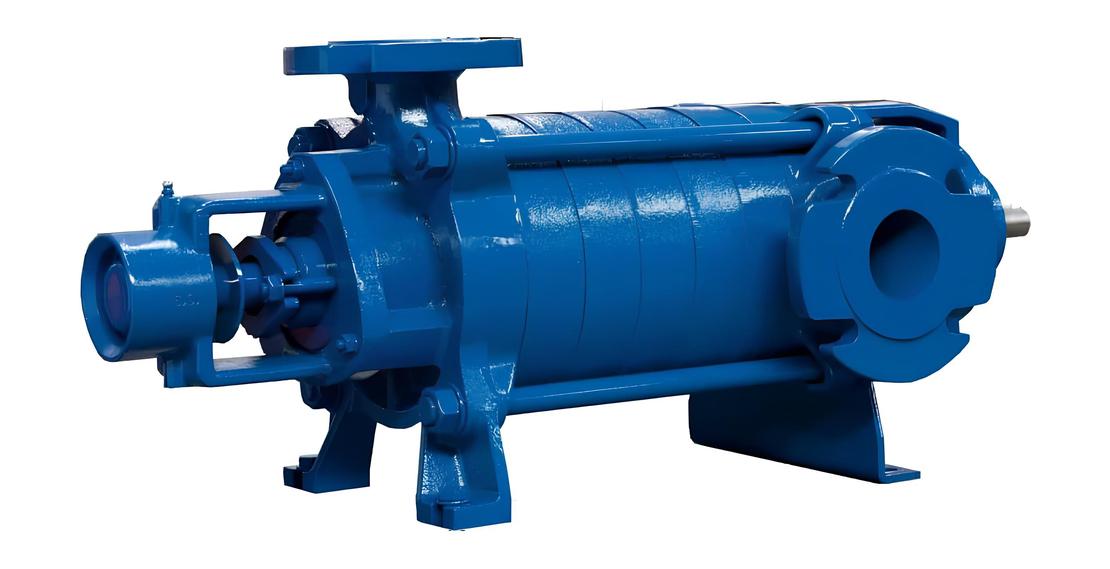
The most widely used type of pump in industry. The liquid is moved by the centrifugal force generated by a rotating impeller. These pumps provide stable flow rates at relatively low pressure and are ideal for pumping clean or slightly contaminated water in large volumes, including water supply systems, cooling circuits, and irrigation applications.
Gear Pumps
A type of rotary pump in which two meshing gears move the liquid between the gear teeth and the pump housing. They provide stable pressure regardless of the liquid's viscosity, making them the standard solution for pumping oils, lubricants, fuels, and other viscous fluids in mechanical engineering and oil refining industries.
Vortex Pumps
An intermediate solution between centrifugal and rotary pumps. The liquid moves along a spiral path due to the vortex effect created by the impeller. These pumps perform well with liquids containing dissolved gases or small amounts of air and generate higher pressure at lower flow rates compared to centrifugal pumps.
Submersible Pumps
Designed to operate fully submerged in the pumped liquid, including clean water, wastewater, and drainage water. Their primary applications include wells, boreholes, basement drainage, sewage systems, and drainage installations. Thanks to their sealed construction, they are less demanding in terms of installation conditions.
Recommended Pump Types by Industry
Water Supply and Wastewater Systems. Centrifugal pumps are used for main water supply networks and pressure boosting, while submersible pumps are used in wells, groundwater extraction, and wastewater pumping at treatment facilities.
Construction. Submersible drainage pumps are used to remove water from excavations and basements during construction work, while slurry pumps (a type of centrifugal pump) are designed to handle liquids containing solid particles.
Oil & Gas and Petrochemical Industry. Gear and screw pumps are preferred due to their ability to handle viscous and lubricating fluids while maintaining stable operation under high pressure.
Key Pump Selection Parameters
Before choosing a specific model, it is essential to determine five key parameters:
- Liquid Type — clean water, viscous fluid, liquid containing impurities, or abrasive media. This factor determines the appropriate pump type.
- Required Pressure (Head) — measured in meters of water column or bars; depends on the lifting height and pipeline length.
- Flow Rate (Capacity) — the volume of liquid pumped per unit of time (m³/h), determined by the requirements of the application.
- Housing and Internal Component Material — cast iron for general-purpose applications, stainless steel for food and chemical industries, bronze or special alloys for aggressive media.
- Operating Conditions — liquid temperature, presence of solid particles, continuous or intermittent operation, and installation method (submersible or surface-mounted).
Selecting a pump according to these parameters helps reduce not only the purchase cost but also long-term operating expenses, as an incorrectly selected pump wears out more quickly and requires more frequent maintenance and repairs.
Comparison Table of Industrial Pump Types
| Pump Type | Pressure | Suitable for Viscous Liquids | Typical Applications | Typical Housing Material |
|---|---|---|---|---|
| Centrifugal | Medium | Low | Water supply, cooling, irrigation | Cast iron, stainless steel |
| Gear | High, stable | High | Oils, fuels, lubricants | Steel, cast iron |
| Vortex | Higher than centrifugal at low flow rates | Medium | Liquids containing dissolved gases | Cast iron, stainless steel |
| Submersible | Depends on the model | Low to medium (drainage versions are available for liquids containing impurities) | Wells, drainage, wastewater | Stainless steel, plastic |
Ensuring Uninterrupted Pumping Station Operation
For industrial facilities where pumps operate continuously around the clock (for example, in manufacturing water supply systems or wastewater pumping stations), it is essential to maintain operation even during power outages. In such cases, the pumping station is equipped with a backup generator of the appropriate capacity. Learn more about selecting a generator for your business in our Generator Catalog.
Explore our complete range of industrial, domestic, and drainage pumps, as well as professional assistance in selecting the right equipment for your application, in the Pump Equipment section. Our team has extensive experience supplying pumping and power generation equipment for industrial facilities. Learn more on our About the Company page.
FAQ
Which pump is best for pumping viscous liquids?
For viscous and lubricating fluids such as oils, fuels, and syrups, a gear pump is the optimal choice because it provides stable pressure regardless of the fluid's viscosity.
What is the difference between an industrial pump and a domestic pump?
Industrial pumps are designed for continuous-duty operation, higher pressure, and greater flow capacity. They are also manufactured from materials that are resistant to aggressive media and wear, unlike domestic pumps, which are intended for occasional use.
Which pump is suitable for a well?
Submersible pumps are specifically designed for wells. Their construction allows continuous underwater operation and efficient lifting of water from significant depths.
Can a centrifugal pump be used for liquids containing solid particles?
A standard centrifugal pump is not suitable for pumping liquids with solid particles. For these applications, special slurry versions of centrifugal pumps equipped with reinforced impellers are used.